What “electromechanical” describes
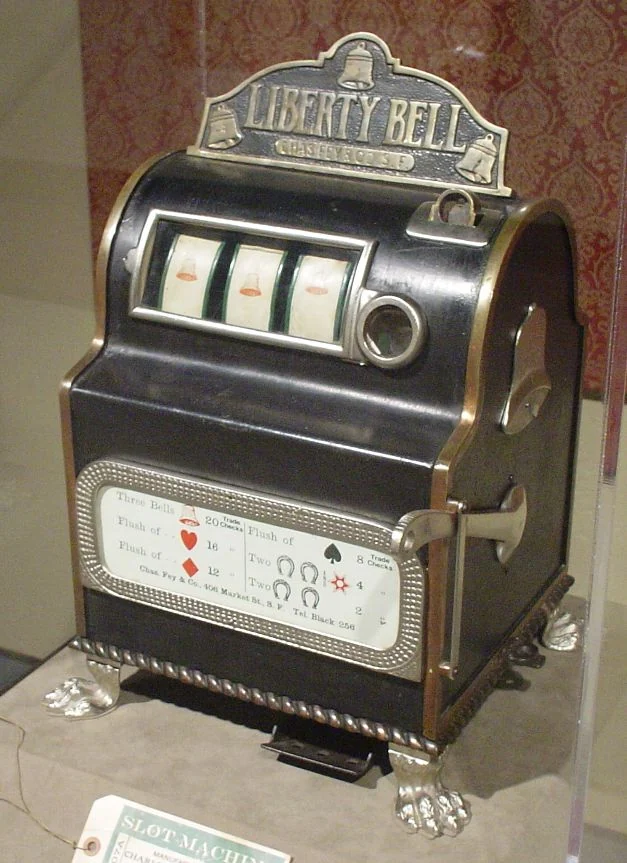
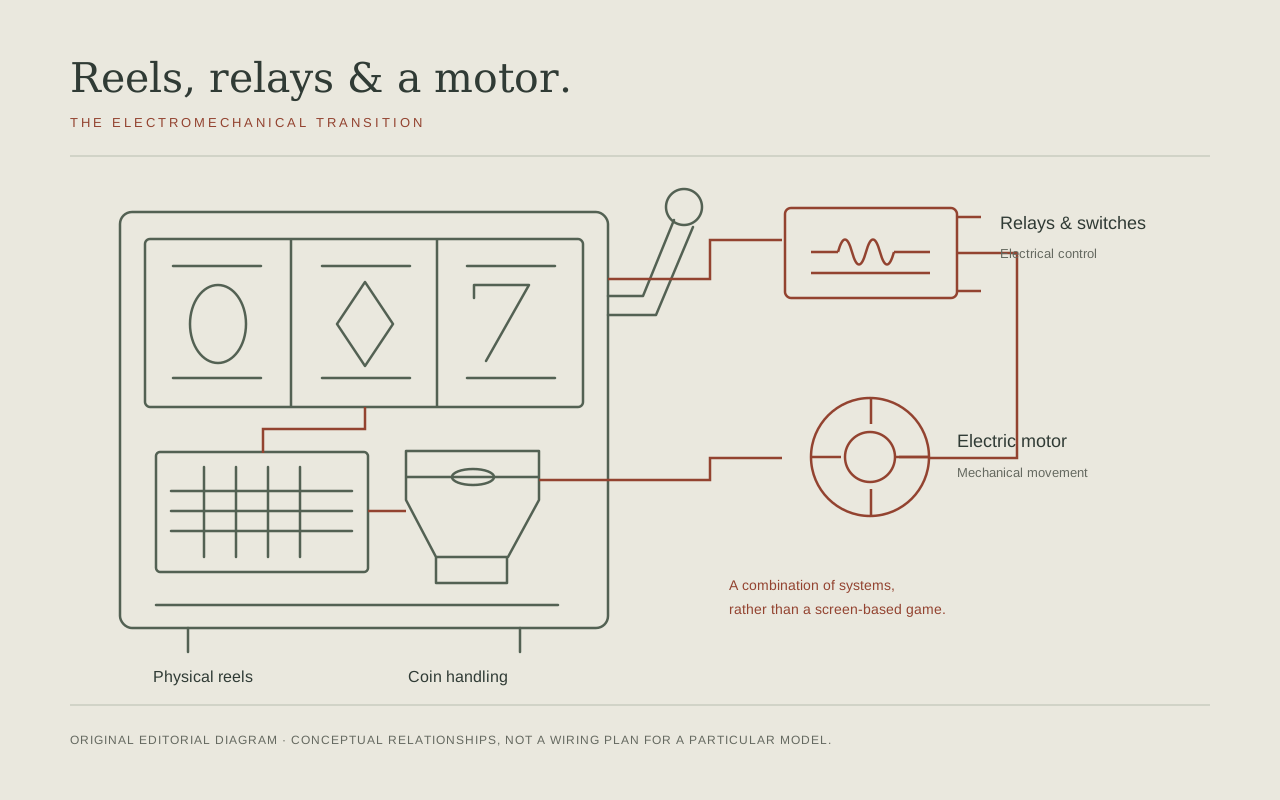
The term refers to a combination of electrical systems and moving mechanical parts. It does not mean that the reels necessarily disappeared or that the whole game became a computer program. That distinction matters when dating machines from their appearance alone: a familiar lever and reel window do not identify the mechanism hidden inside.
For visitors reading a museum label, the most useful question is what each subsystem did. The display, the controls, the coin mechanism and the method of determining or recording outcomes do not always change at the same time.
Editorial context and interpretation.
An Australian collection example
The Powerhouse Collection’s Jubilee Mk.12, attributed to Nutt & Muddle and dated 1970–1980, is explicitly described as electromechanical. The record places the appearance of this technology in the 1960s and discusses competition between Australian manufacturers and imported machines.
Its woodgrain cabinet, payment tray and physical handle show the persistence of an established furniture-like form during technological change. An electrical transition could happen inside an object that still looked familiar in a club interior.
Section sources: [1] Powerhouse Collection
Why intermediate technologies matter
A simple sequence of lever, then screen skips the work needed to bridge those systems. Electromechanical designs belong in the story because they expose the gradual redistribution of tasks between mechanisms and electrical components.
They also caution against treating technology as a universal timeline. A museum’s production range identifies a particular model; it does not prove that every venue adopted that model in the same year. The next stage, software-based equipment, brought another set of questions about records, inspection and testing.
Editorial context and interpretation.
Manufacturing competition and the Jubilee name
The Jubilee catalogue record identifies Nutt & Muddle as an Australian manufacturer and places the company’s public flotation in 1965. It also describes the disappearance of the Jubilee name after the takeover completed in 1985. Technology history here intersects with the changing structure of an industry.
A shift in a brand name is different from a shift in engineering. Companies can continue manufacturing older designs, and new owners can retain a familiar cabinet identity. A collection record that separates maker, model, production range and acquisition date helps prevent those events from being mistaken for one another. This is why the electromechanical transition benefits from studying individual objects alongside corporate chronologies.
Section sources: [1] Powerhouse Collection
Sources & further reading
Source links support the historical details in the sections indicated. Interpretive passages are labelled separately. Corporate histories are used for dated events, not recommendations.
- Powerhouse Collection — Jubilee poker machine ↗
Museum object 2008/72/1; documents Australian manufacture and electromechanical technology.
Links and historical details reviewed on 21 October 2026. A source may contain older figures or promotional language; neither is treated as current advice here.
Read our editorial policy →