A building with a longer history
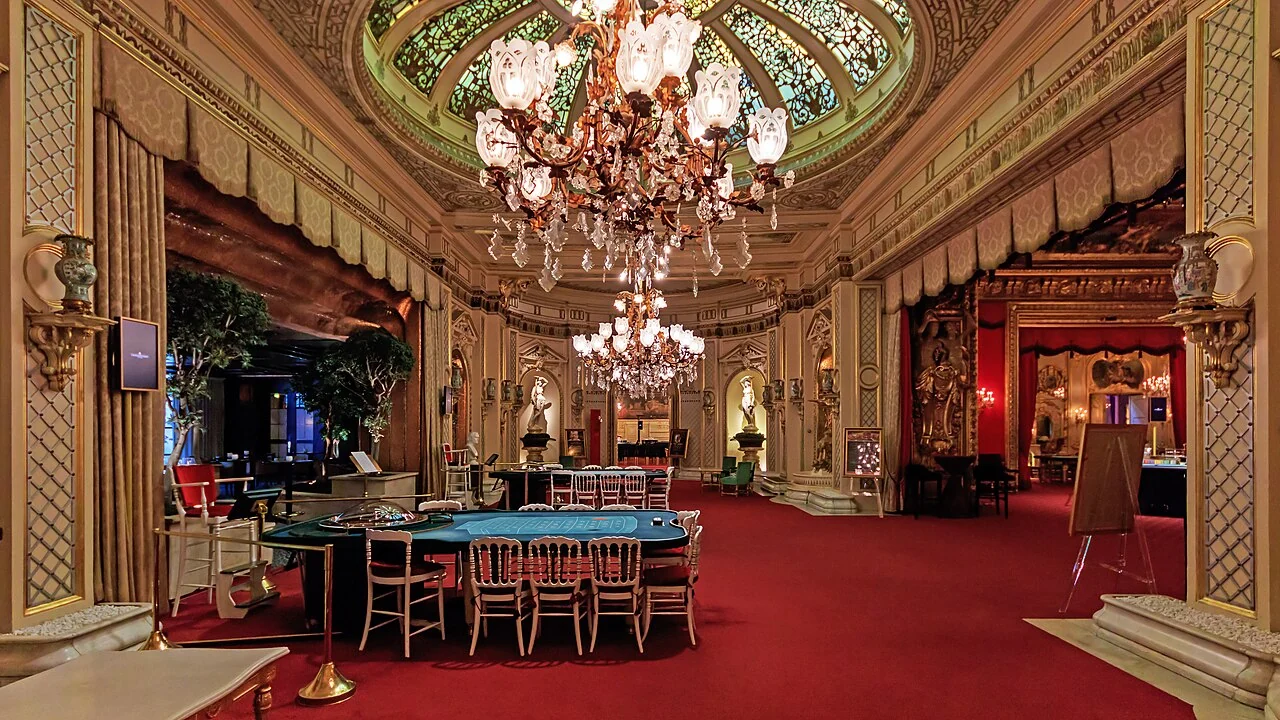
The Kurhaus traces its earlier promenade house to 1766. Baden-Baden’s municipal account describes the later neoclassical building campaign of 1821–1824. The building’s history therefore extends beyond the career of any single casino operator.
That long sequence is useful when interpreting a famous venue. A casino can inherit an architectural setting and a visitor culture that already exist. The public rooms belong to the history of the spa town as much as to the history of gambling.
Section sources: [1] Kurhaus Baden-Baden, [2] City of Baden-Baden
The Bénazet connection
The city’s chronology records Jean-Jacques Bénazet taking the casino concession in 1838. Its World Heritage interpretation connects the Bénazet family with cultural investment, including the theatre and the racecourse at Iffezheim.
These connections show why the spa casino is an institutional model worth studying. Cultural facilities, outdoor movement and a seasonal social calendar could be mutually reinforcing parts of a destination. The casino was embedded in that network, rather than standing apart from the rest of the town.
Section sources: [3] City of Baden-Baden, [2] City of Baden-Baden
A comparison, not a universal template
Baden-Baden offers a useful counterpart to Monte-Carlo. Both histories bring gambling into contact with a wider resort setting, but their local government, architecture and development sequences differ. Similar social functions do not make the places interchangeable.
For readers examining an old postcard or building photograph, the surrounding paths and public spaces deserve attention alongside the principal façade. They help explain how visitors encountered the building and how the casino related to the daily life of a resort.
Editorial context and interpretation.
Sources & further reading
Source links support the historical details in the sections indicated. Interpretive passages are labelled separately. Corporate histories are used for dated events, not recommendations.
- Kurhaus Baden-Baden — The promenade house ↗
Building history tracing the earlier promenade house to 1766.
- City of Baden-Baden — World Heritage article series ↗
Municipal interpretation of spa culture, the Kurhaus and the Bénazet family’s cultural investment; in German.
- City of Baden-Baden — City history ↗
Municipal chronology, including Bénazet’s 1838 concession; in German.
Links and historical details reviewed on 21 October 2026. A source may contain older figures or promotional language; neither is treated as current advice here.
Read our editorial policy →