There is no timeless measure of “largest”
The largest gaming floor, the most hotel rooms and the widest resort footprint measure different things. They also change as properties expand or close. This survey therefore considers major, influential resorts without presenting a current world ranking. A historical comparison should state what is being compared and why.
A useful starting point is the relationship between a casino and its surroundings. Is it one room in an existing town, the anchor of a resort quarter, or a complex large enough to organise its own network of hotels, shops and event spaces? That question travels across periods more reliably than a single size statistic.
Editorial context and interpretation.
Monte-Carlo and Baden-Baden: the destination
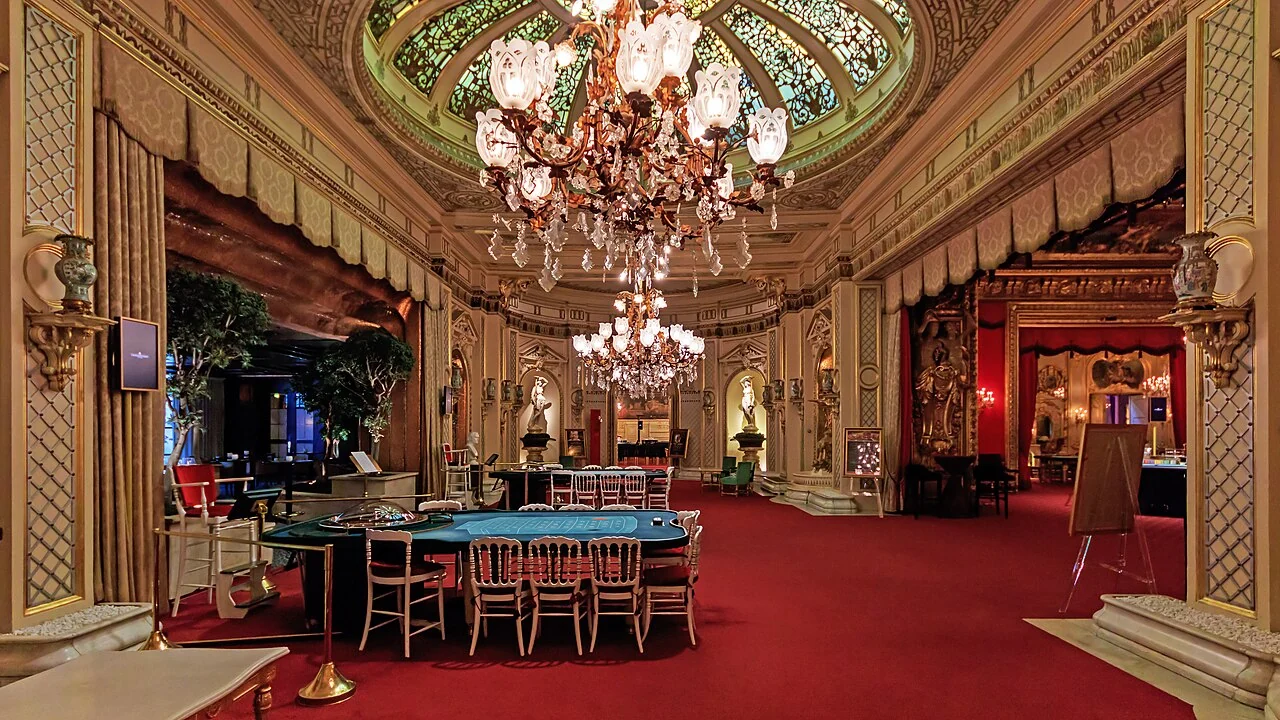
The histories of Monte-Carlo and Baden-Baden show gambling alongside theatres, hotels and spaces for public sociability. The local institutions describing those places place cultural facilities and resort development near the centre of the story.
Their significance is not that every later casino copied a particular decorative scheme. They demonstrate an enduring organisational idea: the gaming room can be connected to a wider visitor economy. Architecture and cultural programming help explain how a place becomes a destination.
Section sources: [1] Société des Bains de Mer, [2] City of Baden-Baden
Bellagio and The Venetian Macao: the complex
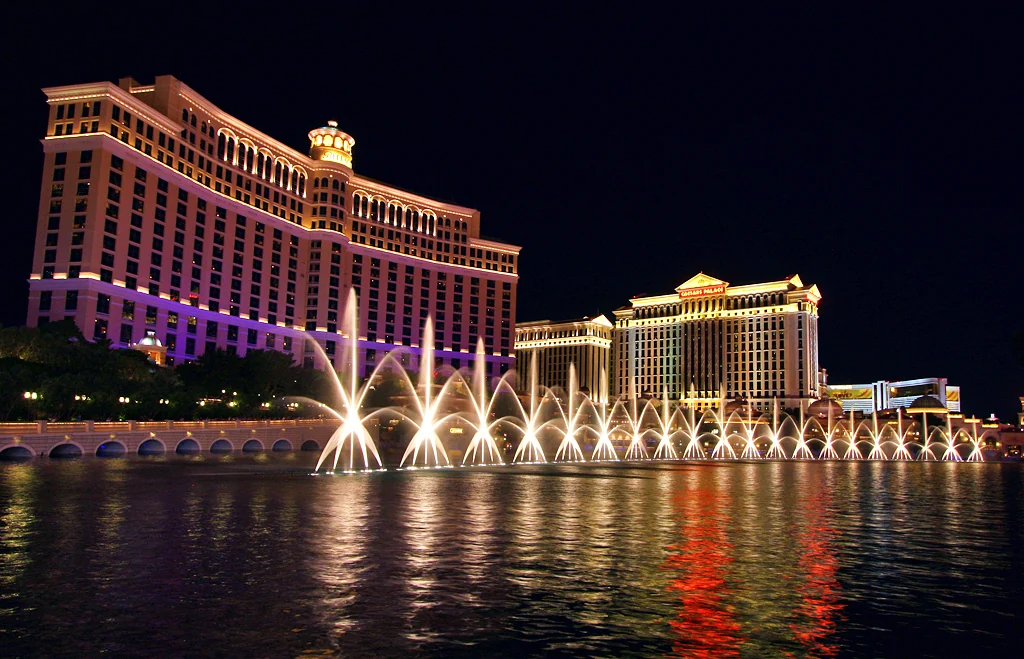
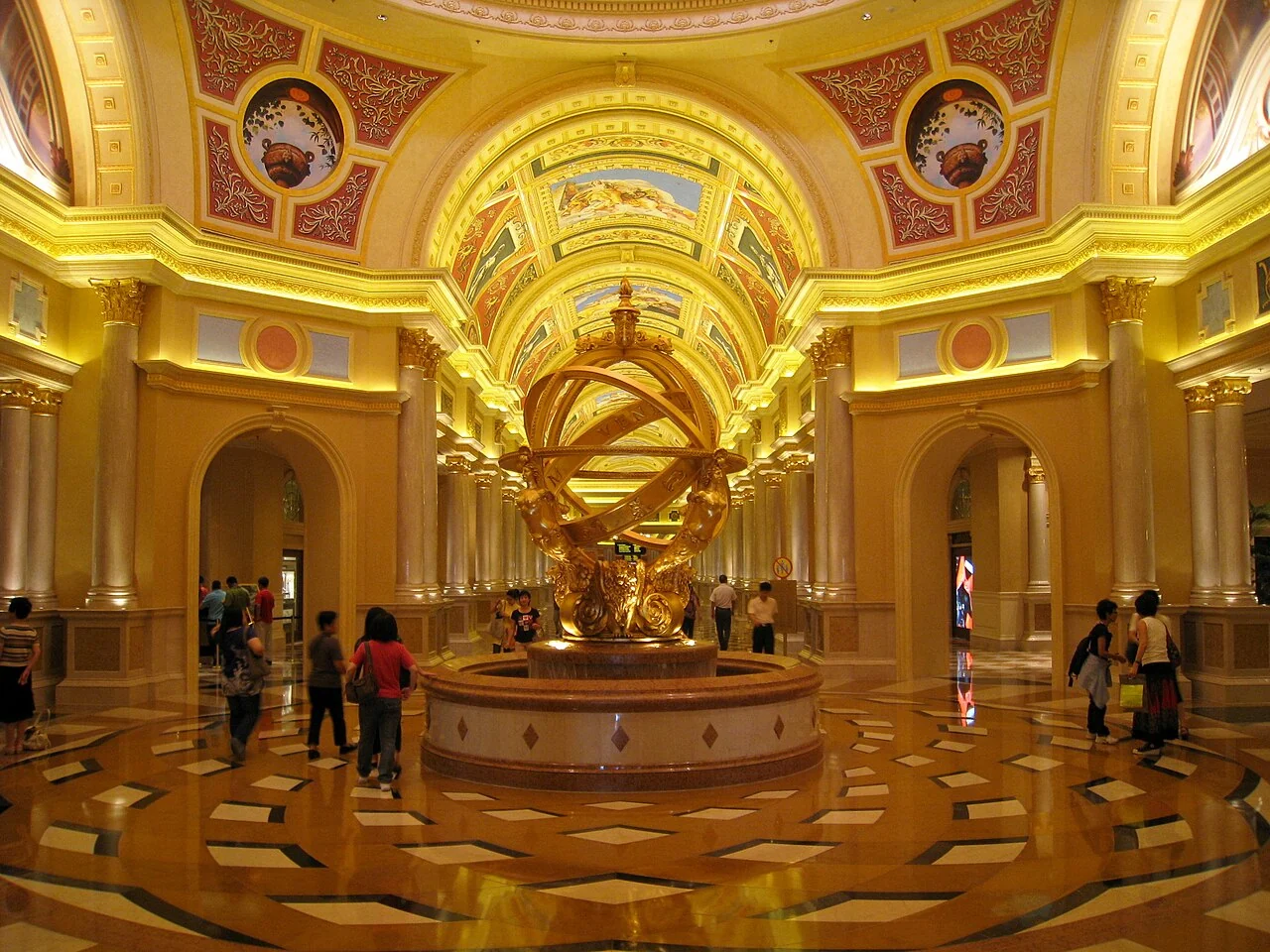
Bellagio opened in Las Vegas in 1998; The Venetian Macao followed in 2007. Their primary corporate records place them in the era of large resort development. The project record of The Venetian’s lighting designer also makes clear how much specialist design work such a complex requires.
Read together, these cases shift attention from a single room to systems of accommodation, circulation, presentation and service. Historical scale is about the coordination of activities as much as the number of tables. The linked profiles examine the dated events behind these influential properties without rating or recommending them.
Section sources: [3] MGM MIRAGE, [4] Sands China, [5] Fisher Marantz Stone
Tribal enterprise and the large American casino
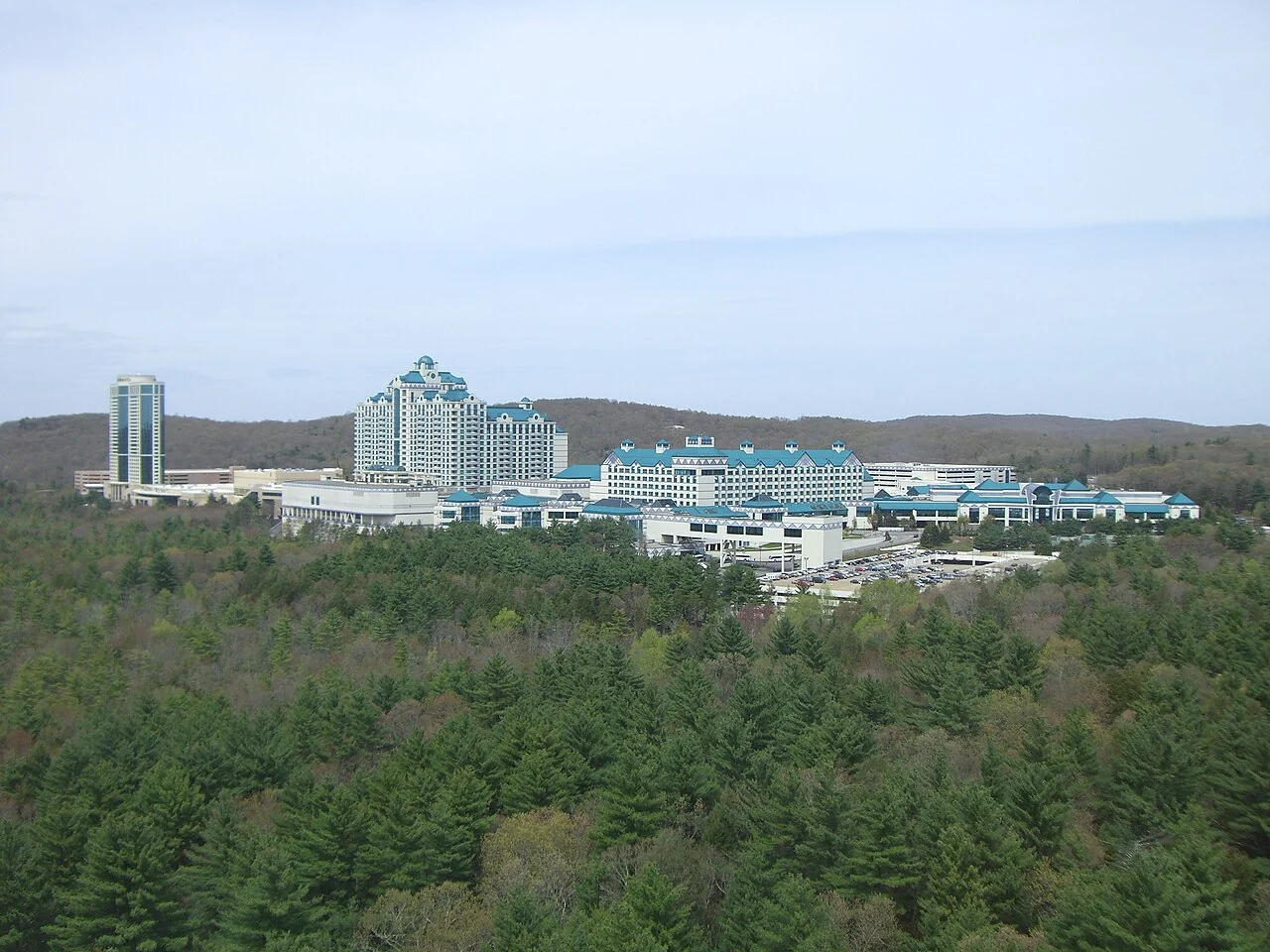
Large US casino properties also developed through tribal enterprise, in an institutional setting distinct from Nevada’s commercial resorts. Foxwoods’ property chronology dates its casino opening to 15 February 1992. WinStar’s own historical account describes a 2003 beginning with bingo and a smaller range of electronic games, before its later expansion.
The National Indian Gaming Commission traces its regulatory framework to the Indian Gaming Regulatory Act of 1988. That history matters because a tribal gaming enterprise is not simply another privately owned Strip hotel. Tribal governments, economic development and a distinct legal relationship belong to the explanation. Comparing these large properties without that context would make physical scale visible while obscuring the institutions behind it.
Section sources: [6] Foxwoods, [7] WinStar, [8] National Indian Gaming Commission
The landmarks between the familiar names
A comparison that jumps directly from nineteenth-century Europe to Bellagio leaves out important intermediate developments. The Nevada industry chronology places the International in 1969 and The Mirage in 1989. Both belong in an account of the growing scale and wider visitor functions of the casino resort.
Their inclusion also helps clarify what an influential landmark means. A property may be significant because of its plan, its financing, its entertainment programme or its place in a construction cycle. Historical influence cannot be reduced to present-day fame. Reading a series of dated examples reveals a set of changes, rather than awarding one resort permanent credit for inventing everything that followed.
Section sources: [9] Nevada Resort Association, [10] Nevada Resort Association
Sources & further reading
Source links support the historical details in the sections indicated. Interpretive passages are labelled separately. Corporate histories are used for dated events, not recommendations.
- Société des Bains de Mer — Company history ↗
An operator’s institutional history; used for dated events, rather than its promotional assessments.
- City of Baden-Baden — World Heritage article series ↗
Municipal interpretation of spa culture, the Kurhaus and the Bénazet family’s cultural investment; in German.
- MGM MIRAGE — 2000 Form 10-K, SEC archive ↗
Primary company filing for the year ended 31 December 2000. Item 1, Our Operating Properties, Bellagio: opening on 15 October 1998. This replaces a newsroom PDF that returned 404 during review.
- Sands China — 2013 annual results filed with the SEC ↗
Corporate filing recording the August 2007 opening of The Venetian Macao.
- Fisher Marantz Stone — Venetian Macau Resort Hotel ↗
Lighting designer’s project record documenting the 2007 resort and its architectural lighting.
- Foxwoods — Property fact sheet ↗
Operator’s dated property chronology; used to establish the casino’s 1992 opening.
- WinStar — A history of the property ↗
Operator’s account of a 2003 opening and subsequent growth. Size superlatives are not adopted as a current ranking.
- National Indian Gaming Commission — Institutional history ↗
Federal regulator’s account of the framework created by the 1988 Indian Gaming Regulatory Act.
- Nevada Resort Association — The 1960s ↗
Industry chronology of corporate ownership legislation, new properties and Howard Hughes’s acquisitions.
- Nevada Resort Association — The 1980s ↗
Chronology of The Mirage’s 1989 opening and the expanding resort model.
Links and historical details reviewed on 21 October 2026. A source may contain older figures or promotional language; neither is treated as current advice here.
Read our editorial policy →