Architecture at the roadside
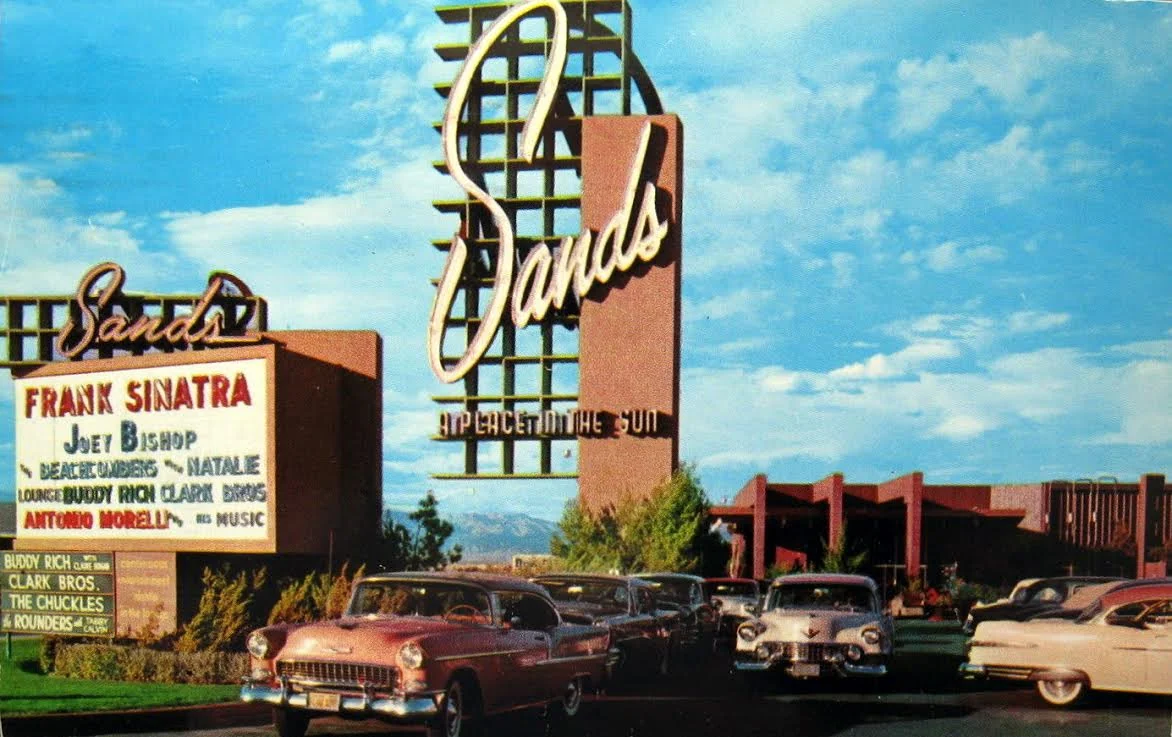
The Neon Museum dates the Sands’ distinctive sign to 1952 and describes a large cantilevered grid with script lettering. In a landscape encountered from a moving vehicle, such a structure was part of the architecture of recognition.
A sign did not merely label a building. It organised a distant view and translated a property’s identity into a form that could be recognised quickly. Studying lettering, supporting structures and lighting therefore belongs within architectural history, rather than being dismissed as an account of decoration.
Section sources: [1] The Neon Museum
A building and a public image
The museum’s history of demolished hotels identifies the Sands with the Rat Pack era and records its demolition in 1996. That association is an important part of the property’s public image, but no celebrity narrative can describe the full life of a hotel.
For a fuller account, performance history needs to sit beside the work of hotel staff, the design of public space and the commercial record. Publicity creates a selective memory; the historian’s task includes identifying what that memory leaves out.
Section sources: [2] The Neon Museum
After demolition
A demolished property can remain culturally visible even when visitors can no longer enter it. Images circulate, signs enter collections and an old name may continue to shape the way a site is discussed. Physical disappearance and cultural disappearance are not the same process.
The Sands is therefore a useful example of how to read a lost landmark. Start with dated objects and records, distinguish the building from its reputation, and resist the temptation to turn every fragment into evidence for a complete golden-age story.
Editorial context and interpretation.
Sources & further reading
Source links support the historical details in the sections indicated. Interpretive passages are labelled separately. Corporate histories are used for dated events, not recommendations.
- The Neon Museum — Lost signs of Las Vegas, part one ↗
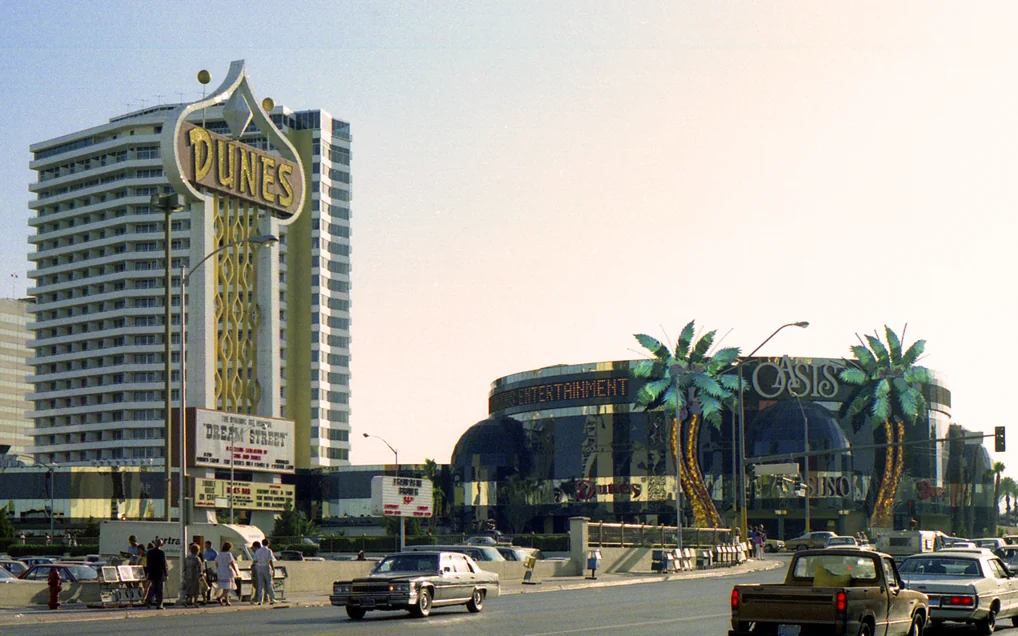
Historical interpretation of Dunes and Sands signs as architecture and material culture.
- The Neon Museum — History of demolished hotels in Las Vegas ↗
Museum chronology of the Dunes, Landmark, Sands and other demolished properties.
Links and historical details reviewed on 21 October 2026. A source may contain older figures or promotional language; neither is treated as current advice here.
Read our editorial policy →