Closure is not the same as disappearance
A casino operation can close while its building survives. A hotel can be renamed without being demolished. A property can lose its main facilities to fire while accommodation remains elsewhere on the site. These are different historical outcomes, and using “no longer exists” for all of them creates avoidable confusion.
The most useful histories identify which object has disappeared: a business, a name, a structure or an entire complex. They also distinguish the date of closure from the date of destruction.
Editorial context and interpretation.
El Rancho, the Dunes and the Sands
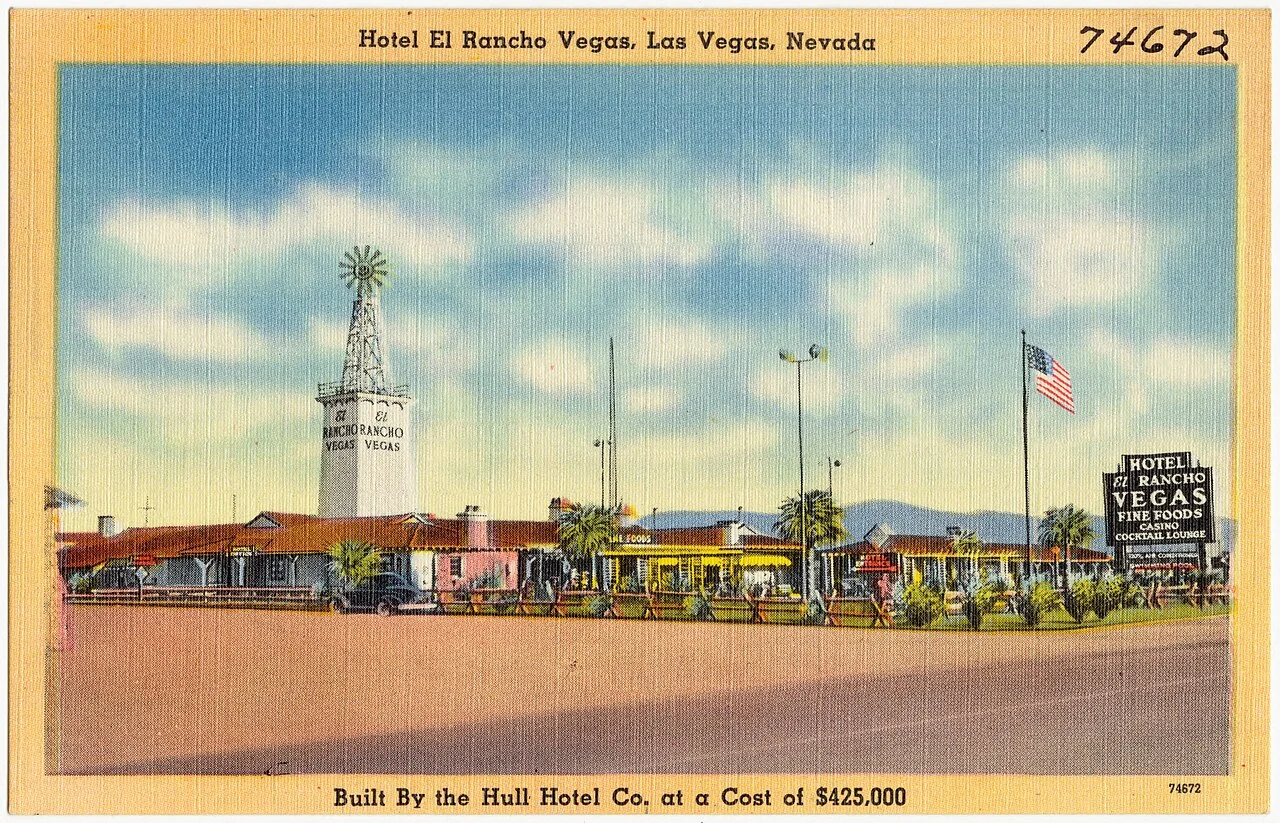
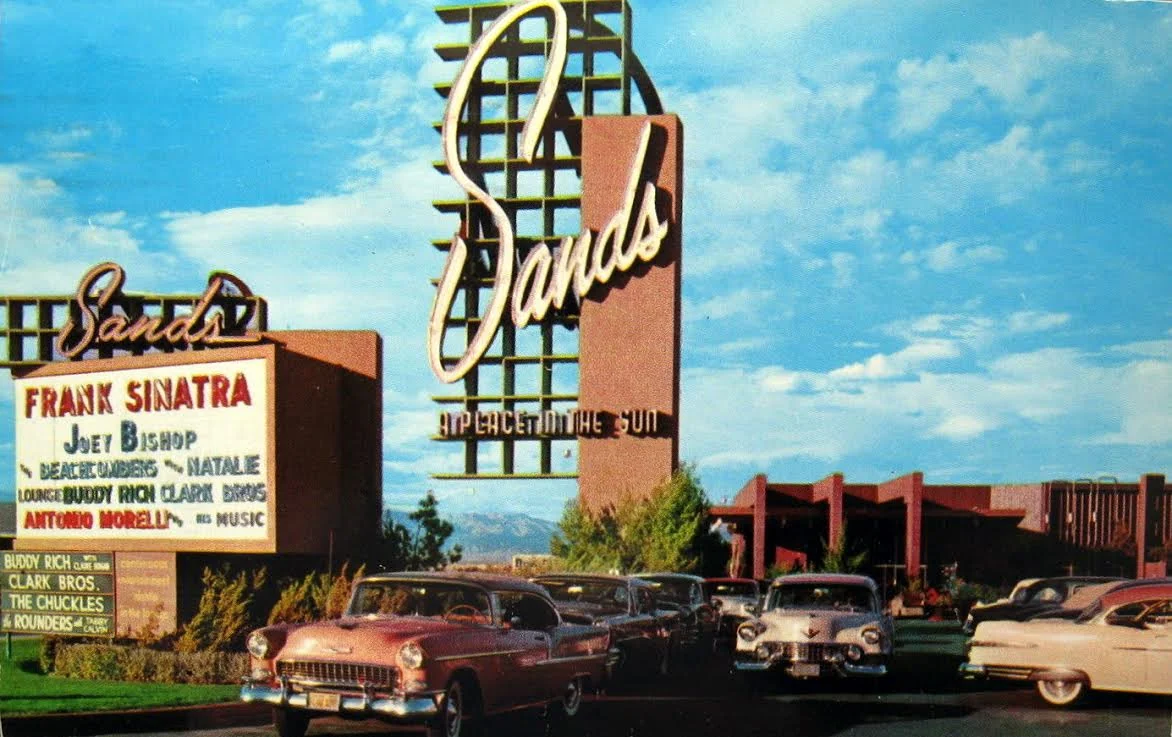
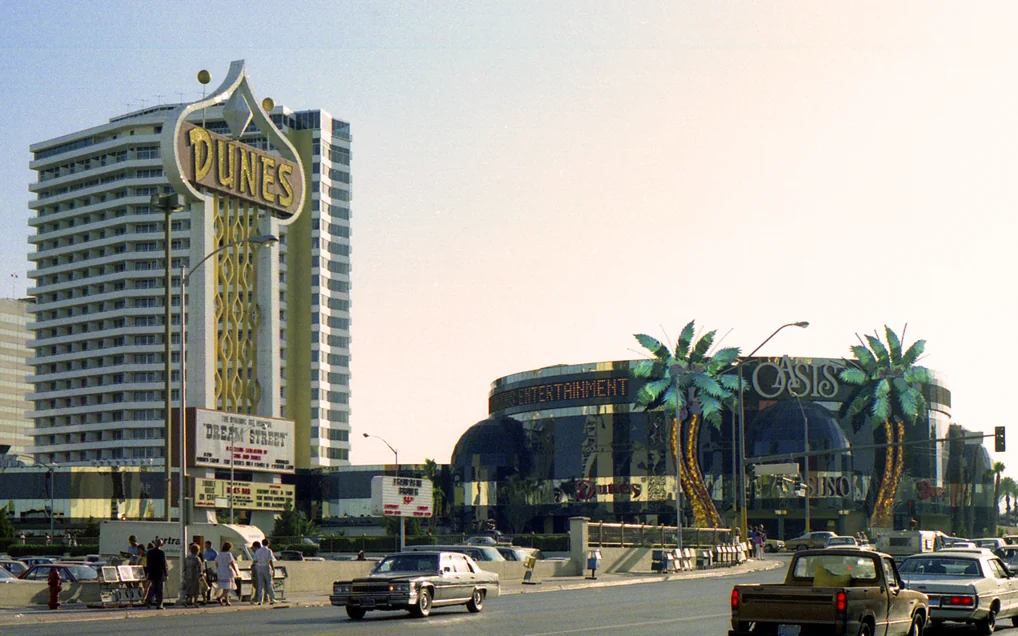
The Clark County Fire Department preserves an account of the El Rancho Vegas fire, an event that changed the history of an early Strip resort. The Neon Museum documents the Dunes’ north-tower implosion in October 1993 and the Sands’ demolition in 1996. These records identify particular structures and events; they should not be read as evidence that every building at a property disappeared at the same moment.
The Dunes and Sands sites were subsequently associated with new resort developments. That fact illustrates redevelopment, but it should not turn demolition into an inevitable or celebratory ending. Removal also destroys evidence about work, design and everyday use.
Section sources: [1] Clark County Fire Department, [2] The Neon Museum, [3] The Neon Museum
Objects as an alternative archive
The Neon Museum’s discussion of lost signs treats them as substantial designed structures. A surviving sign can preserve lettering, materials and a distinctive visual identity even after the building behind it has vanished.
Photographs, menus, plans and staff records can answer different questions. Publicity photographs may reveal the image management wanted to circulate; a maintenance record may say more about daily operation. No single object reconstructs a whole resort. The historian’s task is to assemble a partial account while making the gaps clear.
Section sources: [4] The Neon Museum
The Landmark: a different redevelopment story
The Neon Museum records the Landmark’s opening in 1969 and its demolition in November 1995 to make room for convention-centre expansion. This is a useful counterpart to sites cleared for a successor casino resort. Redevelopment can change the use of land as well as the identity of a property.
The example widens the question beyond replacement buildings. A vanished casino might be connected to a convention district, a transport scheme or a changed land market. “Lost” is a description of the result, not a sufficient explanation of how that result came about. Establishing the later use of the site helps recover the public and commercial decisions that followed a closure.
Section sources: [3] The Neon Museum
Sources & further reading
Source links support the historical details in the sections indicated. Interpretive passages are labelled separately. Corporate histories are used for dated events, not recommendations.
- Clark County Fire Department — The El Rancho hotel fire ↗
Fire-service history of the disaster that destroyed the resort’s main facilities.
- The Neon Museum — The Dunes’ dramatic demolition ↗
Museum account identifying the north tower and its sign in the 27 October 1993 implosion. The event is not described here as the simultaneous demolition of every building on the property.
- The Neon Museum — History of demolished hotels in Las Vegas ↗
Museum chronology of the Dunes, Landmark, Sands and other demolished properties.
- The Neon Museum — Lost signs of Las Vegas, part one ↗
Historical interpretation of Dunes and Sands signs as architecture and material culture.
Links and historical details reviewed on 21 October 2026. A source may contain older figures or promotional language; neither is treated as current advice here.
Read our editorial policy →