A port economy changes direction
The Gaming Inspection and Coordination Bureau dates the Portuguese administration’s legalisation of gambling to 1847. Its historical account links that decision to the search for revenue and economic diversification as nearby Hong Kong became a competing port. Gambling was already present; the legal change reorganised its relationship with government.
This context is essential. Macao’s development cannot be understood merely as the later importation of a Las Vegas model. The territory had a long-established gambling economy with its own games, customer networks and arrangements between operators and the administration.
Section sources: [1] Macao Gaming Inspection and Coordination Bureau
The concession as an institution
The regulator’s chronology describes earlier monopoly operators and identifies Sociedade de Turismo e Diversões de Macau, or STDM, as the company registered in 1962 after a new concession process. A concession granted the right to conduct specified activities under government authority; it was not simply the name of a casino building.
That distinction explains why corporate histories, individual properties and the history of regulation need to be read together. A familiar hotel name may survive a change in the system around it, while an apparently new property can belong to an older institutional structure.
Section sources: [2] DICJ
Cotai and the integrated resort
Sands China’s corporate filing records the opening of The Venetian Macao in August 2007. Its combination of accommodation, convention facilities, retail and entertainment illustrates a resort model in which the casino is one component of a very large development.
Cotai made questions of land, movement and construction central to the story. Comparing it with the older peninsula encourages a useful historical question: how does a gambling destination change when activity moves from an established city fabric to a new district of large complexes? The answer involves urban form and public policy as well as casino ownership.
Section sources: [3] Sands China
From the Lisboa to the post-monopoly framework
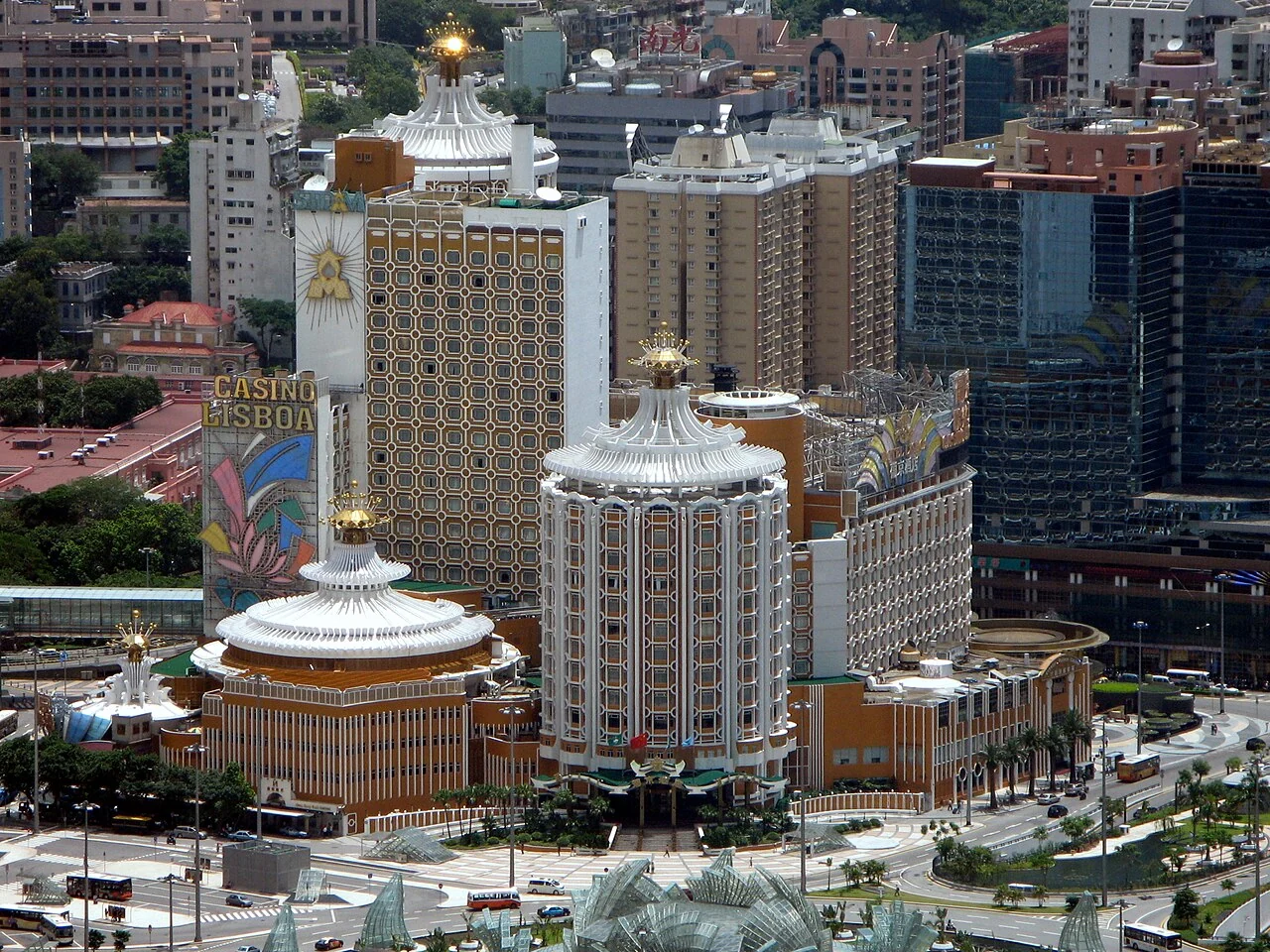
DICJ records the start of full operations at the Lisboa Hotel and Casino Lisboa in 1970. The building belongs to the STDM period, before the changes associated with the return of Macao to Chinese sovereignty in 1999 and the later concession tender.
Law 16/2001 supplied a new legal framework, and the regulator records the announcement of three concession winners in February 2002. New concessions did not mean that every successful bidder had an operating casino that day: construction took time. The distinction between an award, a signed agreement and a property opening is essential to understanding the sequence. It also explains why the transformation of the industry unfolded across several years rather than at one ceremonial moment.
Section sources: [1] Macao Gaming Inspection and Coordination Bureau
Sources & further reading
Source links support the historical details in the sections indicated. Interpretive passages are labelled separately. Corporate histories are used for dated events, not recommendations.
- Macao Gaming Inspection and Coordination Bureau — Gaming history ↗
Regulator’s historical overview. Contemporary-sounding statistics on this older page are not treated as current data.
- DICJ — História da indústria de jogos de Macau ↗
Portuguese version of the regulator’s historical chronology, including the STDM era.
- Sands China — 2013 annual results filed with the SEC ↗
Corporate filing recording the August 2007 opening of The Venetian Macao.
Links and historical details reviewed on 21 October 2026. A source may contain older figures or promotional language; neither is treated as current advice here.
Read our editorial policy →