A useful beginning, rather than the beginning of gambling
People wagered long before purpose-built casinos existed. A history of the casino therefore needs a narrower question: when did gambling become concentrated in a recognised public establishment, with an authority controlling where it happened? Venice’s Ridotto, authorised in 1638, is an important answer. The Palazzo Mocenigo museum guide identifies it as a public gambling house run by the Venetian Republic.
Calling it the first casino can conceal this distinction. A public house, a private gathering and a modern licensed resort are different institutions. Their histories overlap, but one should not imagine that all earlier gambling was informal, or that the modern casino appeared fully formed in a single year.
Section sources: [1] Musei Civici di Venezia
The palace and the public purse
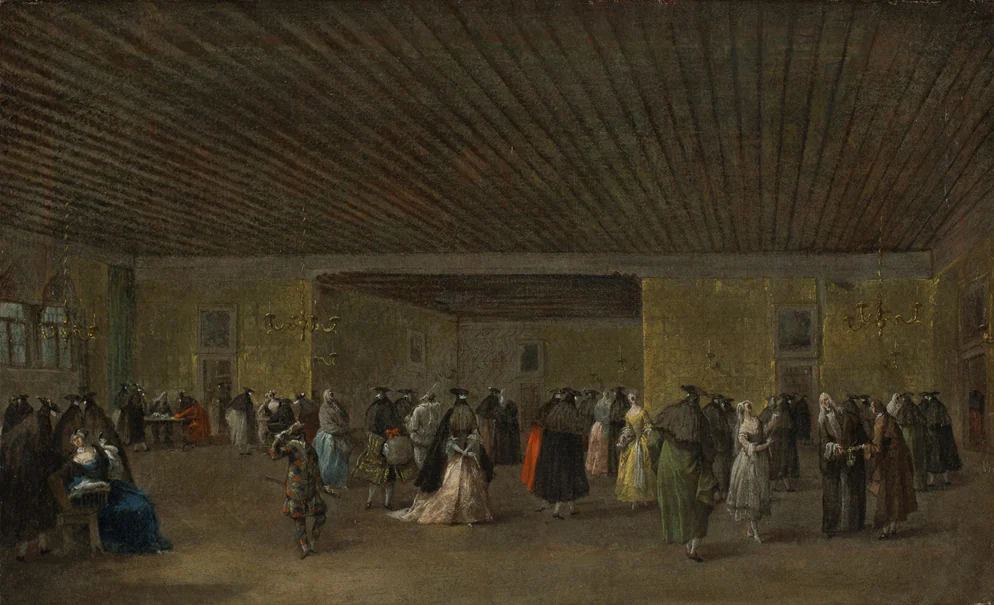
The Ridotto operated in Palazzo Dandolo at San Moisè. The Venetian museum’s interpretation of Francesco Guardi’s painting explains the government’s intention to concentrate widespread gambling and direct part of its financial flows into state revenue. This was a political and fiscal arrangement as much as an entertainment venue.
For a historian, the building matters because it made an elusive activity visible. A defined address creates the possibility of observing admission, rooms, staff and the handling of money. The institutional story is consequently broader than any particular game played inside.
Section sources: [2] Ca’ Rezzonico
A model with limits
The Grand Palais describes masked visitors and an establishment tied to the long Venetian carnival season. It also records the decision to close the Ridotto in November 1774, amid concern about the dissipation of family wealth and illicit dealings. State permission did not remove the social costs that surrounded gambling.
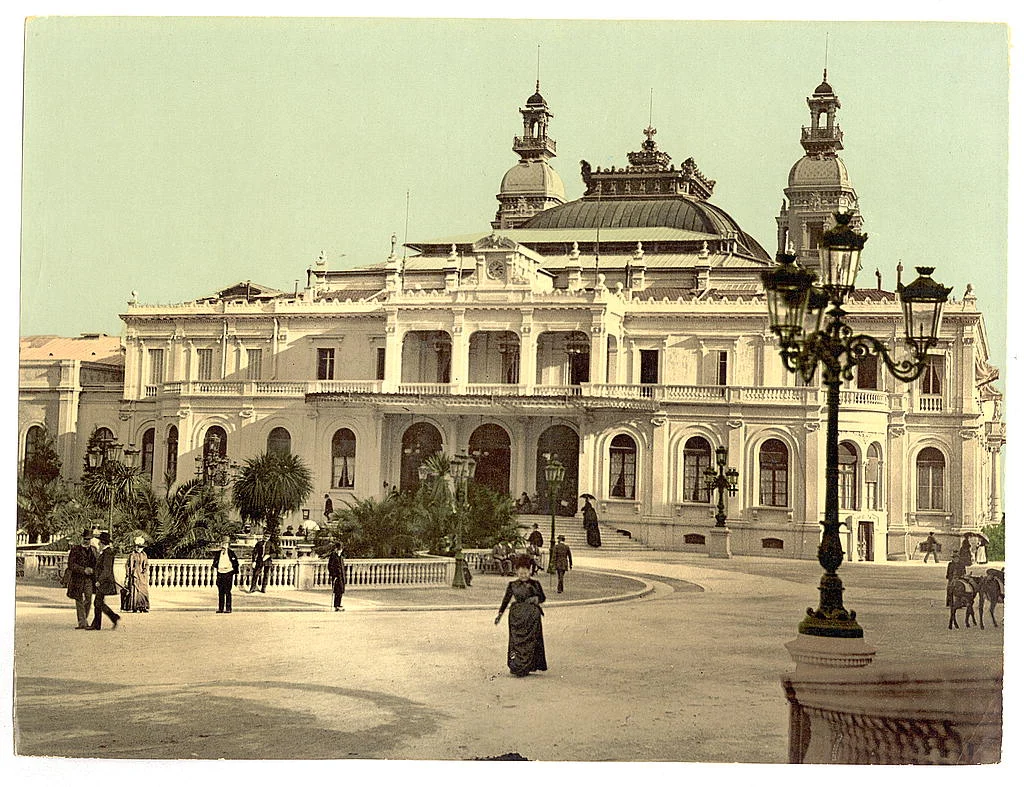
The later European resort casino developed in another setting: the spa town. Baden-Baden’s combination of promenades, cultural events and the Kurhaus placed gambling within a wider programme of sociability. Comparing the two settings is more useful than drawing an uninterrupted line from a Venetian palace to a twentieth-century hotel.
Section sources: [3] Grand Palais, [4] City of Baden-Baden
Carnival, anonymity and the limits of access
The Ridotto’s reputation depended on carnival as well as government permission. Masks made an unusual form of public sociability possible: visitors could be highly visible as participants while concealing part of their personal identity. The Grand Palais account identifies the masked visitor as a defining feature of the establishment.
This does not mean that a “public” gambling house was socially equal or economically accessible to everyone. Public authorisation concerns an institution’s status; admission, cost and convention determine who can make use of it. The two ideas should not be confused. Paintings of well-dressed crowds tell us something about representation and social performance, but they cannot establish a complete demographic portrait of the people who entered the rooms.
Section sources: [3] Grand Palais, [2] Ca’ Rezzonico
Sources & further reading
Source links support the historical details in the sections indicated. Interpretive passages are labelled separately. Corporate histories are used for dated events, not recommendations.
- Musei Civici di Venezia — Palazzo Mocenigo room guide ↗
English museum guide describing the Republic’s public gambling house.
- Ca’ Rezzonico — Guardi’s painting of the Ridotto ↗
Collection interpretation supplied by the Venetian museum, hosted by Google Arts & Culture.
- Grand Palais — What was the Venetian Ridotto? ↗
Museum account of the 1638 opening, the rooms and the 1774 closure; in French.
- City of Baden-Baden — World Heritage article series ↗
Municipal interpretation of spa culture, the Kurhaus and the Bénazet family’s cultural investment; in German.
Links and historical details reviewed on 21 October 2026. A source may contain older figures or promotional language; neither is treated as current advice here.
Read our editorial policy →