An object is not a complete rulebook
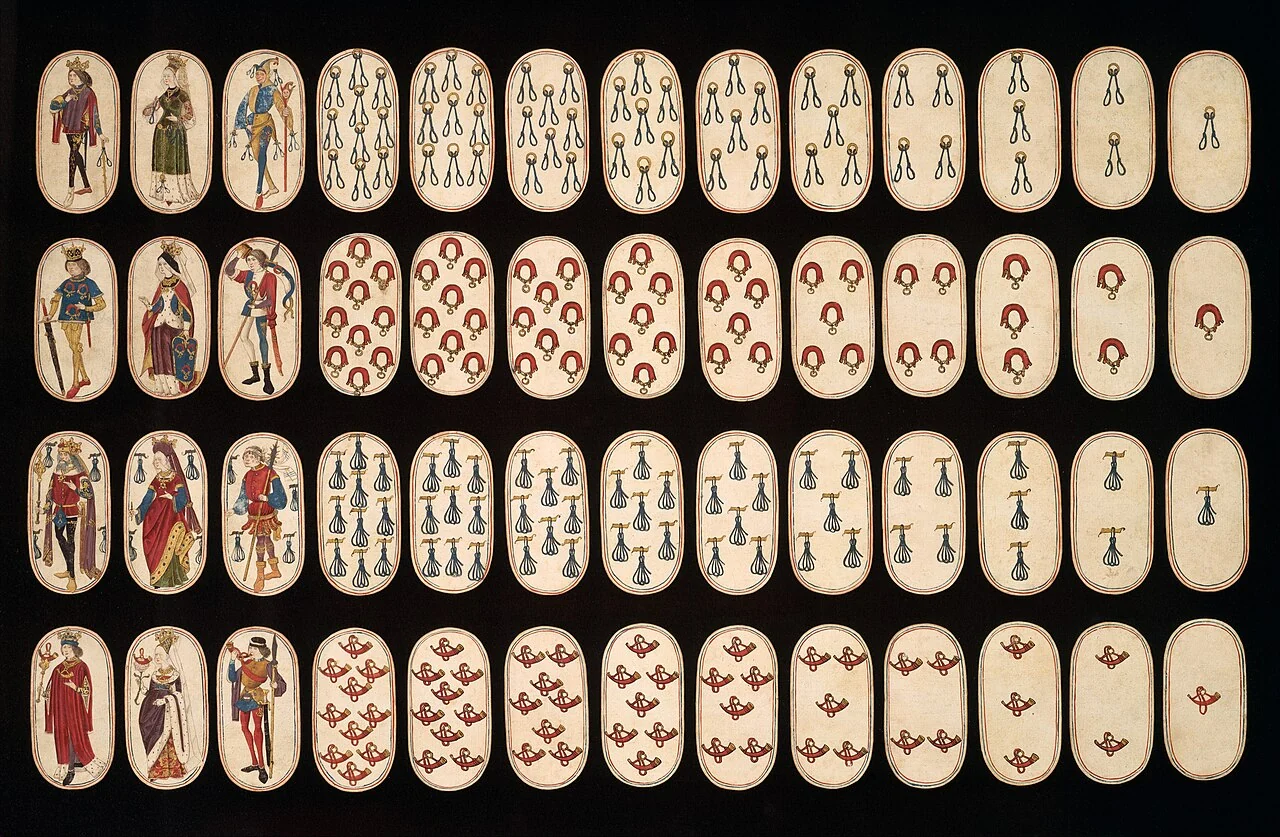
The Metropolitan Museum’s Cloisters playing-card deck preserves an extraordinary set of fifteenth-century objects. The museum also acknowledges a crucial limit: we do not know exactly how some named games of that period were played. Surviving cards can establish materials and imagery without supplying a complete set of rules.
That gap is a useful starting point. A modern explanation should not project today’s game back onto every historical deck, nor assume that a familiar name guaranteed identical play in different places.
Section sources: [1] The Metropolitan Museum of Art
Roulette: equipment and procedure change together
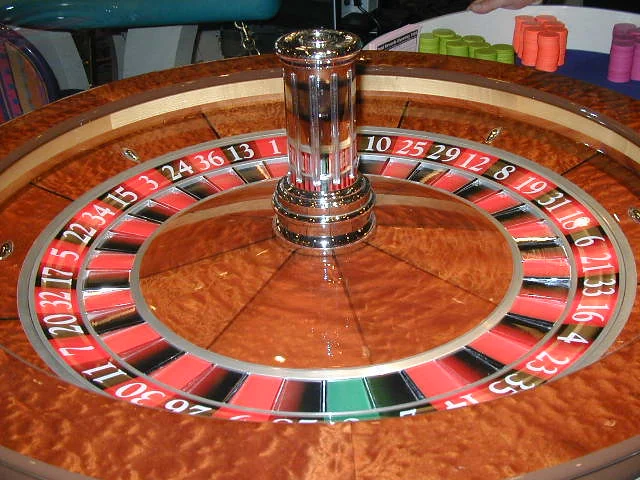
The 1911 Encyclopædia Britannica describes Monte-Carlo roulette with thirty-seven wheel compartments: the numbers one to thirty-six and a single zero. It also discusses double-zero variants elsewhere and a procedure known as en prison. The article is valuable as a period description, rather than as a current guide to play.
These differences show that the name “roulette” does not identify one unchanging configuration. A wheel’s equipment and the written treatment of particular outcomes belong to the same historical account. Bad Homburg’s operator chronology also records the introduction of American roulette there in 1989, demonstrating how an established venue could expand its range of versions long after its nineteenth-century foundation.
Section sources: [2] Encyclopædia Britannica, 1911, [3] Spielbank Bad Homburg
Poker: the pack and the draw
David Parlett’s historical account describes early American poker played with twenty cards and the later adoption of the fifty-two-card pack. The larger pack made room for more participants and for drawing replacement cards. A change in equipment therefore enabled a change in the structure of play.
Draw and stud developed as different forms rather than one universally fixed game. These differences belong to the history of the rules themselves, not just to the history of tournament organisation. A modern competition archive supplies another layer of evidence, but it does not establish the origins of every variant.
Section sources: [4] David Parlett
Twenty-one and its descendants
Parlett places the twenty-one family in the history of European card play and traces the relationship between vingt-et-un, British pontoon and American blackjack. Related names identify a family of games whose conventions diverged as they travelled.
This history is more complicated than the frequently repeated claim that a single promotional payment invented the name blackjack. Naming stories need documentary support, and resemblance between games does not prove that all their rules were identical. Comparing recorded versions is a firmer method than starting with a modern rulebook and assuming it always existed.
Section sources: [5] David Parlett
From local practice to written standards
Rules define what equipment is used, which actions are permitted and how outcomes are settled. Their formalisation also creates a record that another person can inspect. In a commercial venue, that record has institutional importance because it connects a game to procedures for supervision and dispute resolution.
New Jersey’s regulatory index separates gaming equipment from the rules of the games. Chapter 69F provides a concrete example of an extensive written framework with distinct provisions for different games and variants. It is evidence of a regulatory approach, not proof that all jurisdictions use the same rules.
Section sources: [6] New Jersey Division of Gaming Enforcement, [7] New Jersey
Competition creates another kind of record
The World Series of Poker archive locates its 1970 event at Binion’s Horseshoe in Las Vegas. Event archives can help trace organised competition through dates, venues and recorded results. They should be distinguished from a complete history of the much older card games themselves.
A useful history therefore keeps several strands apart: the development of equipment, the names used for games, the written procedures of a venue and the format of a competition. None of those, alone, establishes a universal origin. This article examines historical documentation rather than offering playing instructions or strategies.
Section sources: [8] World Series of Poker
Sources & further reading
Source links support the historical details in the sections indicated. Interpretive passages are labelled separately. Corporate histories are used for dated events, not recommendations.
- The Metropolitan Museum of Art — The Cloisters Playing Cards ↗
Museum record for the surviving fifteenth-century deck and the limits of reconstructing its games.
- Encyclopædia Britannica, 1911 — Roulette ↗
A period description of Monte-Carlo roulette, transcribed on Wikisource; used as evidence of the version described in 1911.
- Spielbank Bad Homburg — Historical chronology ↗
Operator’s dated history of the Blanc brothers and changes to roulette; in German.
- David Parlett — A history of poker ↗
Named historical research discussing the 20-card game, the 52-card pack and the development of the draw.
- David Parlett — The history of blackjack ↗
The card-game historian’s own account of the twenty-one family and the development of modern variants.
- New Jersey Division of Gaming Enforcement — Act and regulations ↗
Official index distinguishing gaming equipment rules from rules of the games.
- New Jersey — Chapter 69F, Rules of the Games ↗
Published regulatory text used as an example of formal rule documentation; versions may be superseded.
- World Series of Poker — Historical archive ↗
Event archive identifying the 1970 series at Binion’s Horseshoe.
Links and historical details reviewed on 21 October 2026. A source may contain older figures or promotional language; neither is treated as current advice here.
Read our editorial policy →